
Quick Summary
- Amazon SP-API connects warehouse systems directly with Amazon Seller Central
- Enables real-time synchronisation of orders, inventory, and shipments
- Automates key warehouse operations like order processing and fulfilment
- Reduces manual work and operational errors
- Helps Amazon sellers, 3PL providers, and D2C brands scale efficiently
- Improves inventory accuracy and prevents overselling
- Supports multi-channel warehouse management through centralised systems
Amazon warehouse operations in competitive markets like the UK require speed, accuracy, and real-time data flow. Managing orders manually or updating inventory across systems is no longer scalable, especially for growing sellers and 3PL providers.
This is where Amazon SP-API becomes essential. It connects Amazon Seller Central with warehouse management systems, allowing data to move automatically between platforms. As a result, businesses can streamline order processing, maintain accurate inventory, and automate fulfilment workflows.
For Amazon and eBay sellers, 3PL providers, and D2C brands, this integration is key to improving efficiency and scaling operations without increasing manual effort.
Overview of Amazon SP-API and How It Works
Amazon Selling Partner API (SP-API) is a modern integration interface that allows warehouse management systems and other applications to connect directly with Amazon Seller Central. Built on REST architecture and JSON, it enables secure, scalable, and real-time data exchange, replacing the older Amazon MWS API.
For warehouse operations, SP-API acts as the backbone of Amazon API for warehouse management, enabling seamless communication between Amazon and internal systems.
How It Works
Amazon SP-API allows systems to communicate with Amazon through structured API requests and responses, automating processes such as order retrieval, inventory updates, and shipment tracking.
In advanced setups, it also supports event-driven updates using Amazon EventBridge, allowing Amazon to push real-time events like new orders directly to warehouse systems.
Basic Workflow
- System sends a request (e.g., fetch orders or update inventory)
- Amazon processes the request
- Data is returned in JSON format
- System updates automatically
This enables faster and more efficient Amazon SP-API integration for warehouse management.
Old vs New: How SP-API Improves Warehouse Integration
| Feature | Old Way (Manual / MWS) | SP-API Way (Modern Integration) |
|---|---|---|
| Data Flow | Periodic sync / manual uploads | Real-time & automated sync |
| Security | Static access keys | OAuth 2.0 & Restricted Data Tokens (RDTs) |
| Inventory | High risk of mismatch | Real-time inventory accuracy |
| Order Updates | Delayed processing | Instant order synchronisation |
| Scalability | Limited | Highly scalable & flexible |
How Amazon SP-API Works in Warehouse Management
Amazon SP-API enables warehouse management systems to automate the entire fulfilment workflow by synchronizing data between Amazon Seller Central and internal warehouse operations in near real time.
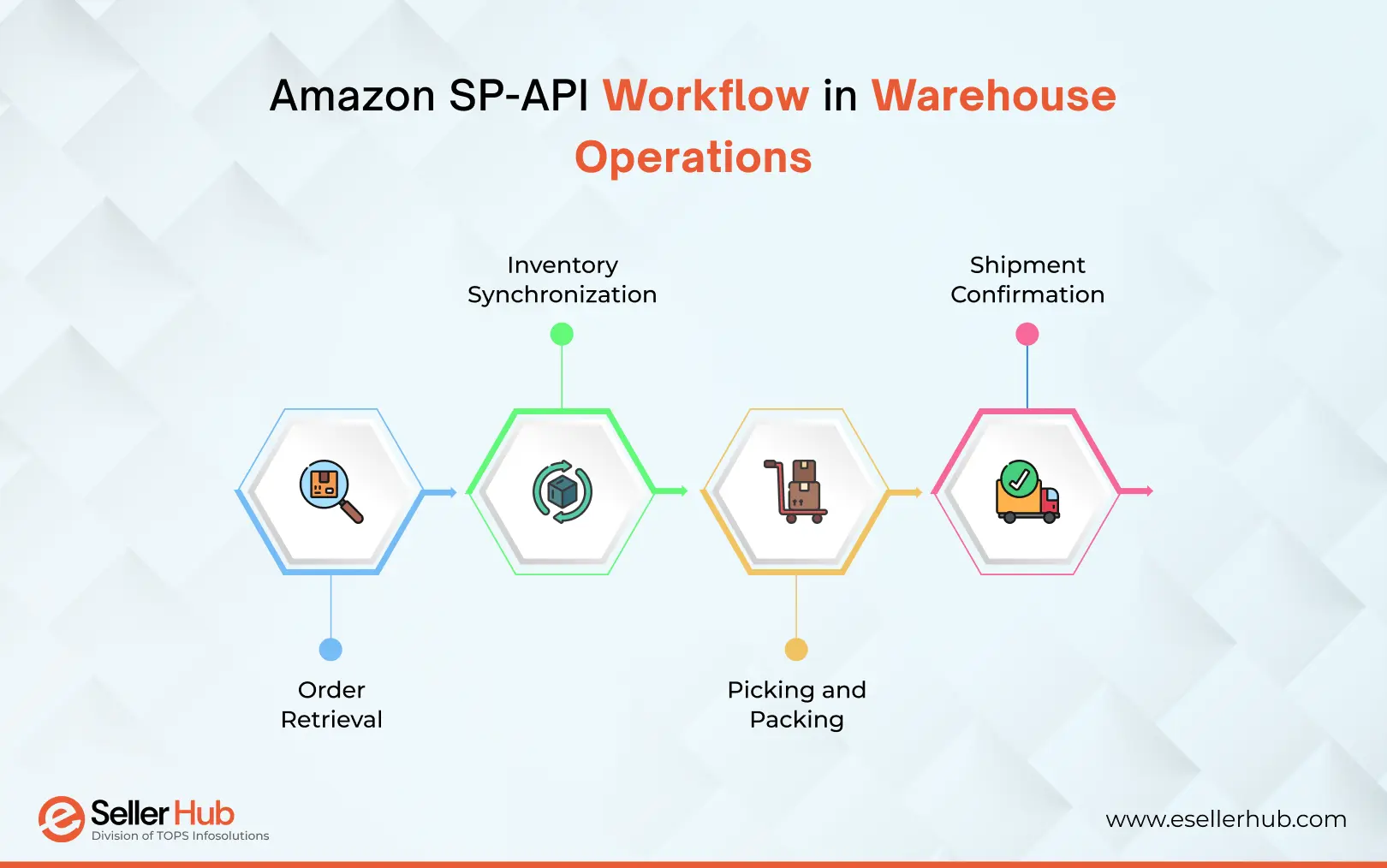
Order Retrieval
Orders are automatically fetched as soon as they are placed, eliminating manual downloads and reducing delays. Event-driven updates further remove order lag during peak periods.
Inventory Synchronisation
Inventory levels are updated in real time, ensuring accurate stock availability and preventing overselling. Safety stock management adds an extra layer of control, particularly useful when managing VAT-sensitive inventory or cross-border fulfilment.
Picking and Packing
Warehouse workflows are triggered automatically, allowing efficient picking and packing operations using accurate order data.
Shipment Confirmation
Once shipped, tracking details are sent back to Amazon, updating order status and triggering customer notifications.
What Data Does Amazon SP-API Provide for Warehouse Systems?
Amazon SP-API provides access to essential operational data that warehouse management systems rely on to automate and optimize fulfilment processes. By enabling real-time data exchange, it ensures that warehouse operations remain accurate, efficient, and fully synchronized with Amazon Seller Central.
Orders Data
SP-API allows warehouse systems to retrieve detailed order information in real time, including order status, item-level details, and customer shipping information. This ensures that orders can be processed immediately without delays or manual intervention.
With instant order visibility, warehouses can reduce processing time and improve fulfilment speed, especially during high-volume sales periods.
Inventory Data
Inventory data is continuously synchronized between Amazon and warehouse systems, providing real-time visibility into available, reserved, and incoming stock levels.
This helps businesses:
- Maintain accurate inventory records
- Prevent overselling and stockouts
- Manage safety or buffer stock effectively, especially when handling multi-channel inventory across the UK and EU marketplaces
For 3PL providers and multi-channel sellers, this level of visibility is critical for handling multiple SKUs and clients efficiently.
Product Data
SP-API provides detailed product-level information such as SKU, ASIN, attributes, and, importantly, product dimensions and weight.
This data is essential for warehouse operations, as it enables:
- Accurate picking and packing
- Optimized storage and handling
- Better shipping cost calculation
Pro Tip: Using product dimensions and weight data enables automated box selection, reducing packaging waste and lowering dimensional weight (DIM) shipping costs.
Shipment and Fulfilment Data
Warehouse systems can send and receive shipment-related data through SP-API, including tracking numbers, carrier details, and shipment status updates.
It also supports FBA inbound shipment data, which is important for warehouses preparing inventory to be sent to Amazon fulfilment centers.
This ensures complete visibility across both merchant-fulfilled and FBA workflows.
Reports and Financial Data
SP-API provides access to operational reports and financial data such as settlement reports, transaction details, and performance metrics.
While not directly used in daily warehouse tasks, this data helps businesses:
- Track fulfilment performance
- Analyze operational efficiency
- Align warehouse operations with business profitability
Why Amazon SP-API Is Important for Warehouse Management
Amazon SP-API is essential for modern warehouse operations because it enables real-time synchronisation between Amazon Seller Central and warehouse systems. This eliminates manual processes and ensures accurate, up-to-date data across operations.
Without integration, businesses often face delays, inventory mismatches, and fulfilment inefficiencies. With SP-API, warehouse systems can automate order processing, maintain accurate inventory, and improve operational visibility.
This becomes even more important as businesses scale, helping them handle higher order volumes efficiently without increasing operational complexity.
How Amazon SP-API Improves Inventory and Order Accuracy
Amazon SP-API improves inventory and order accuracy by enabling real-time synchronisation between Amazon Seller Central and warehouse systems. This ensures both systems always reflect the same, up-to-date data.
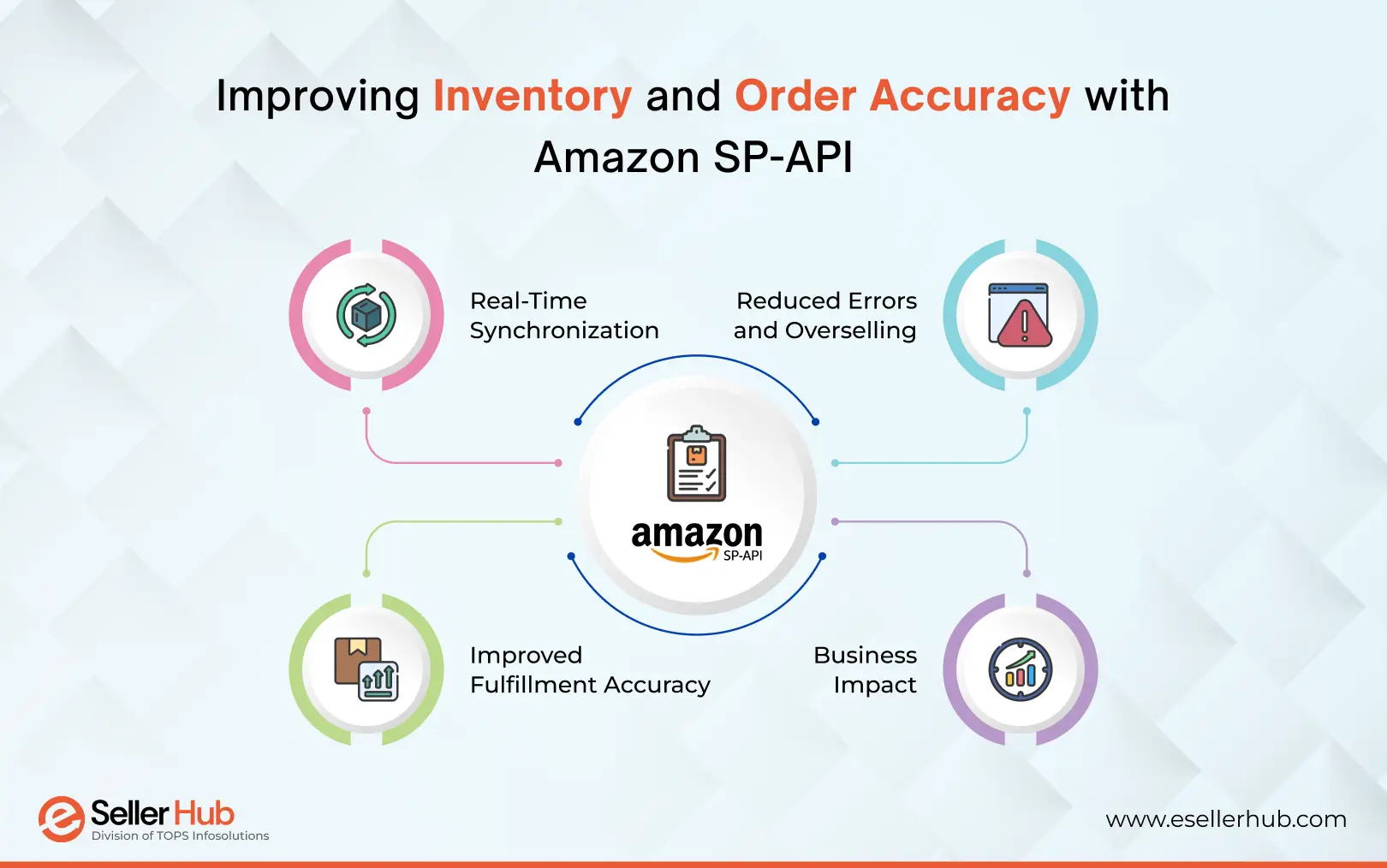
Real-Time Synchronisation
Orders are instantly sent to the warehouse as soon as they are placed, allowing immediate processing. At the same time, inventory updates are reflected on Amazon in near real time, preventing delays and mismatches.
Reduced Errors and Overselling
By automating data exchange, SP-API eliminates manual input, reducing human errors. It also supports safety stock management, helping prevent overselling and order cancellations.
Improved Fulfilment Accuracy
Accurate order and shipping data from Amazon ensures correct picking, packing, and delivery. Systems can also validate items during picking, reducing incorrect shipments.
Business Impact
Better accuracy leads to fewer cancellations, improved customer experience, and stronger Amazon performance metrics like Order Defect Rate (ODR).
Real-World Workflow Example
To understand how Amazon SP-API works in warehouse management, consider a typical real-world fulfilment scenario where data flows automatically between Amazon and the warehouse system.
When a customer places an order on Amazon, the entire process is triggered and handled in real time through SP-API integration.
Workflow Steps:
- A customer places an order on Amazon
- The order is instantly pushed to the warehouse management system via SP-API
- Inventory is automatically updated to reflect the sale
- The warehouse system generates picking and packing instructions
- The order is processed and shipped
- Shipment details and tracking information are sent back to Amazon
Once the shipment is confirmed, the order status is updated in Amazon Seller Central, and the customer is notified with tracking details.
Example Use Case
For example, a UK-based 3PL provider managing multiple Amazon and eBay sellers integrated SP-API with their warehouse system. By automating order retrieval and inventory synchronisation, they reduced manual processing time and minimized order errors during peak sales periods.
Multi-Channel Warehouse Operations Using SP-API
Amazon SP-API plays a key role in enabling multi-channel warehouse operations by centralizing data and synchronizing it across different sales platforms. For businesses selling on Amazon, eBay, and other UK and EU channels, managing inventory and orders separately can quickly become complex.
With SP-API integration, warehouse systems can act as a central hub where all order and inventory data is managed in one place.
Key Capabilities:
- Centralised management of orders and inventory across channels
- Real-time synchronisation between Amazon and other platforms
- Consistent stock visibility to prevent overselling
- Ability to handle increasing order volumes without operational delays
This centralised approach helps businesses scale efficiently while maintaining control over warehouse operations.
Benefits for Different Business Types
Amazon SP-API delivers operational advantages across different types of e-commerce and logistics businesses by improving automation, accuracy, and scalability.
Amazon Sellers
For Amazon sellers, SP-API automates order and inventory management, reducing manual work and improving processing speed. This helps maintain accurate stock levels and better control over operations, especially during high-volume sales periods like seasonal spikes or promotions.
3PL Providers
For 3PL providers, SP-API enables centralised management of multiple clients while automating fulfilment workflows. This allows them to scale operations efficiently and handle higher volumes with better accuracy, without increasing operational complexity.
D2C & Multichannel Brands
For D2C and multichannel brands, SP-API synchronizes inventory and orders across platforms, enabling centralised control and seamless omnichannel fulfilment. This ensures a consistent customer experience across all sales channels.
How eSellerHub Powers Amazon SP-API Warehouse Integration
eSellerHub delivers high-impact Amazon SP-API integrations that turn your warehouse and fulfilment operations into a competitive advantage. We connect your systems directly with Seller Central to automate order processing, maintain real-time inventory accuracy, and ensure seamless shipment tracking.
Our solutions are built to scale, handling complex workflows, high order volumes, and multi-client 3PL operations without friction. Whether you need a custom warehouse management system or a tailored 3PL platform, we build with performance, reliability, and growth in mind.
Partner with eSellerHub to move faster, operate smarter, and get more from your Amazon ecosystem.
Conclusion
Amazon SP-API is no longer optional; it’s the backbone of efficient, scalable warehouse operations. By enabling real-time sync between Seller Central and your internal systems, it eliminates manual work, reduces errors, and keeps orders, inventory, and shipments moving without friction.
For Amazon sellers, 3PLs, and D2C brands, SP-API integration means faster fulfilment, tighter inventory control, and the ability to scale without breaking operations.

Frequently Asked Questions
1. What is Amazon SP-API used for in warehouse management?
Amazon SP-API is used to automate data exchange between Amazon Seller Central and warehouse systems. It enables real-time order retrieval, inventory synchronisation, and shipment tracking, eliminating manual processes like CSV uploads and improving overall warehouse efficiency.
2. How is SP-API better than the legacy Amazon MWS?
Amazon SP-API is more secure, scalable, and faster than MWS. It uses modern REST and JSON standards and supports real-time updates through Amazon EventBridge, whereas MWS relied on slower, request-based data fetching.
3. Can SP-API prevent overselling?
Yes, Amazon SP-API helps prevent overselling by enabling real-time inventory updates. As soon as a product is sold, stock levels are adjusted automatically. It also supports safety or buffer stock settings to avoid selling unavailable inventory.
4. Do 3PL providers need a custom SP-API integration?
Yes, custom Amazon SP-API integration is often required for 3PL providers to manage multiple clients efficiently. It allows centralised control, automated workflows, and customisation based on specific warehouse operations like picking, packing, and fulfilment processes.
5. Is SP-API mandatory for Amazon integration?
Yes, Amazon SP-API is now the official and mandatory API for integrating third-party systems with Amazon Seller Central. The older Amazon MWS has been deprecated, making SP-API the standard for warehouse and inventory integrations.
6. Can SP-API support multi-channel fulfilment (MCF)?
Yes, Amazon SP-API supports multi-channel fulfilment by allowing businesses to use Amazon inventory to fulfill orders from other platforms like Shopify or eBay, enabling centralised warehouse and fulfilment operations.
7. How do I know if my warehouse system is ready for SP-API integration?
If you’re currently managing orders, inventory, or shipments manually or through disconnected systems, you’re likely ready. SP-API integration is especially valuable for businesses experiencing growing order volumes, multi-channel sales, or increasing operational complexity.
8. What’s the typical cost or investment for an SP-API integration project?
Costs vary depending on system complexity, existing infrastructure, and required customisation. Most projects are scoped based on workflow needs such as order management, inventory sync, and multi-client support for 3PLs. A discovery phase is usually required to define accurate effort and cost.




 34173 Gannon Terrace,