
Inventory problems on Amazon UK rarely come from one obvious mistake. They usually build quietly through inaccurate demand forecasting, delayed inbound shipments, or stock sitting too long in FBA. By the time sellers notice a drop in sales or Buy Box performance, the damage is already done, often visible as plummeted rankings and aged inventory surcharges.
Today Amazon UK inventory management has become a high-stakes balancing act. With fluctuating FBA capacity limits and the newly enforced low-inventory-level fees, there is zero room for error. While Amazon handles the physical fulfilment, the strategic burden of inventory planning, replenishment, and forecasting still sits firmly with the seller.
This is exactly where the most common Amazon inventory management mistakes begin, right in the gap between Amazon’s automated alerts and a seller’s actual supply chain reality.
Quick Summary
- Amazon UK inventory issues usually come from weak forecasting, not just stock mistakes
- FBA handles fulfilment, but sellers still control planning and replenishment
- Common risks include stockouts, excess inventory, fragmented stock, and reactive decisions
- Poor inventory control leads to lost Buy Box, higher ad spend, and cash flow pressure
- Sellers who plan ahead and maintain control build more stable and scalable growth
Why Inventory Management Is Harder on Amazon UK Than Sellers Expect
Many sellers underestimate how much control they still need over inventory once they start using FBA. While Amazon UK handles fulfilment, it does not manage demand forecasting, inbound timing, or cash flow planning. Those responsibilities remain with the seller, and that gap is where most problems begin.
Amazon UK inventory management is further complicated by local constraints. FBA storage limits can change with little notice, often tightening seasonally. Inbound shipments may face appointment delays, and receiving times are not always predictable. Sellers importing stock into the UK must also factor in VAT, customs clearance, and longer lead times, all of which compress replenishment windows and reduce forecasting accuracy.
During peak periods such as Prime Day or Q4, when inbound receiving capacity tightens and storage limits fluctuate, these pressures intensify. Inventory decisions made weeks earlier suddenly determine whether a seller captures demand or loses momentum to competitors. What feels manageable in quieter months often breaks down under the weight of UK peak-season volume and complexity.
The Inventory Blind Spots Amazon UK Sellers Commonly Miss
Most Amazon UK inventory problems do not come from a lack of effort. They stem from blind spots in how inventory is planned, monitored, and replenished over time.
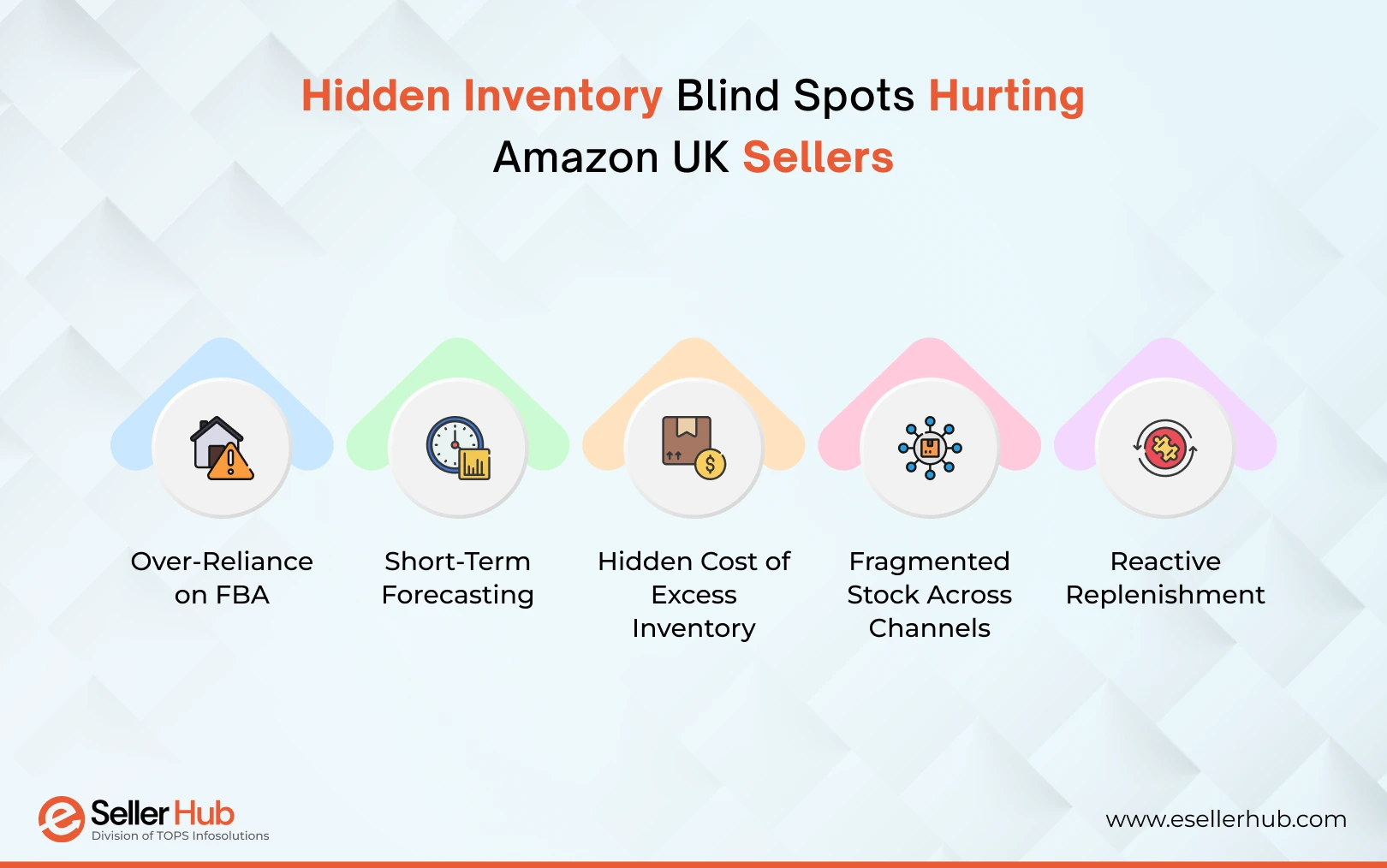
1. Over-Reliance on FBA as an Inventory Strategy
FBA handles storage and fulfilment, but it does not forecast demand or plan replenishment. Many sellers treat FBA alerts as a strategy, reacting only when stock runs low. By then, lead times, inbound delays, and receiving backlogs often force a costly choice: pay for expedited shipping or accept a stockout.
2. Short-Term Forecasting That Ignores Lead Times
A common mistake in Amazon UK inventory management is forecasting based only on recent sales. UK inbound timelines, customs clearance, and receiving delays are rarely factored into demand forecasts, leaving sellers exposed during promotions or seasonal spikes.
3. Underestimating the Cost of Excess Inventory
Overstocking feels safer than running out, but slow-moving inventory quietly erodes margins through storage fees and tied-up cash. Many sellers only recognise the impact once aged inventory charges start appearing in their reports.
4. Fragmented Inventory Across Channels
Stock split between Amazon UK, EU marketplaces, 3PLs, or DTC channels often lacks a single source of truth. This fragmentation forces a difficult trade-off: conservative safety stock that ties up cash, or aggressive stocking that increases overage risk.
5. Reactive Replenishment Instead of Planned Control
Many sellers reorder inventory only when Amazon alerts signal low stock. This reactive approach leaves little room to optimise purchase orders or shipping methods. Late replenishment often means higher freight costs, compressed margins, and rushed decisions. Over time, inventory planning becomes a cycle of urgency rather than a controlled, strategic process.
The Real Cost of Getting Inventory Wrong on Amazon UK
Inventory mistakes on Amazon UK are not just operational inconveniences. They compound into measurable business damage, especially under peak-season pressure.
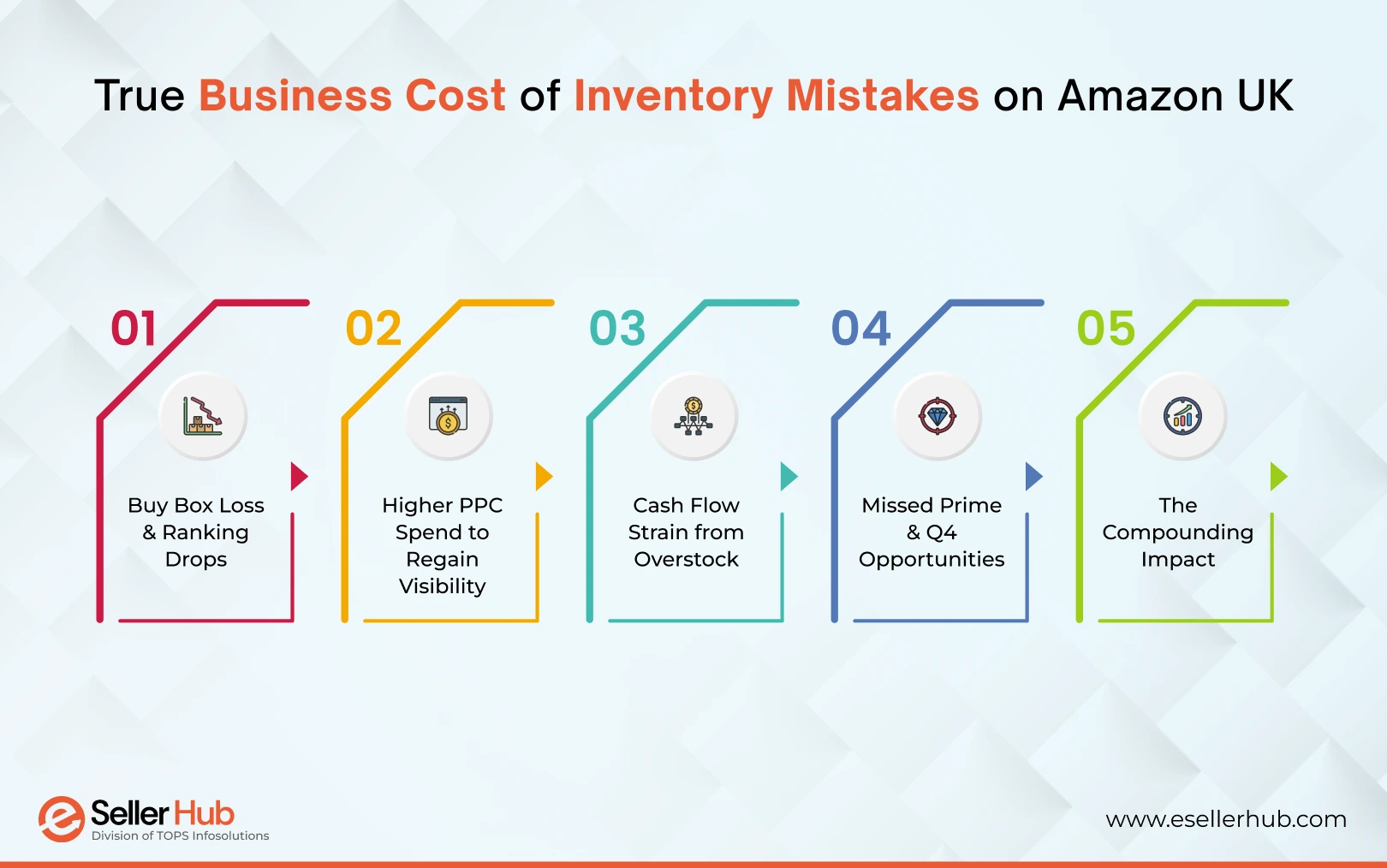
Lost Buy Box and Ranking Drops During Stockouts
When a bestselling SKU goes out of stock, Amazon’s algorithm quickly demotes the listing. Even after restocking, reclaiming Buy Box eligibility and ranking position can take weeks, not days. In that recovery window, competitors capture sales momentum that is difficult to win back.
Higher PPC Spend to Regain Visibility
As organic visibility drops, sellers often compensate by increasing PPC bids to regain exposure. This reactive spend puts further pressure on margins, turning a short-term stockout into a longer-term profitability issue.
Cash Flow Pressure from Overstocked SKUs
Excess inventory ties up working capital that could otherwise support growth, marketing, or new product launches. At the same time, slow-moving stock continues to accumulate monthly storage and aged inventory fees, compounding the cash drain.
Missed Peak Opportunities During Prime Day and Q4
Prime Day and Q4 are where annual profit is often made or lost. Sellers who enter these periods understocked lose not just immediate revenue, but the entire seasonal momentum window. Late inventory arrivals often mean missing the peak altogether.
The Compounding Effect
What begins as a forecasting gap in September can quickly become a profitability problem by November. Inventory issues compound fastest under pressure, making proactive planning essential for sustained growth.
How Sellers Prepare for the Next Stage of Amazon UK Growth
As Amazon UK continues to tighten inventory controls and raise performance expectations, scalable growth depends less on speed and more on predictability. Sellers who perform well over the long term build inventory processes that anticipate pressure instead of reacting to it.
Preparation starts with treating inventory planning as an ongoing discipline, not a periodic task. This means reviewing forecasts regularly, stress-testing replenishment plans ahead of promotions, and aligning purchasing decisions with realistic inbound and receiving timelines. Sellers who do this are better positioned to absorb demand spikes without disrupting cash flow or service levels.
Just as importantly, growth-ready sellers recognise that inventory decisions are commercial decisions. Stock availability directly influences rankings, advertising efficiency, and revenue stability. By tightening control before peak periods arrive, sellers reduce volatility and create a more resilient foundation for expansion in the UK market.
Conclusion
Amazon UK inventory management is no longer just a back-office function. It directly shapes sales performance, cash flow, profitability, and a seller’s ability to scale through peak periods. Most inventory problems do not come from lack of effort, but from blind spots in forecasting, replenishment, and control.
Sellers who address these gaps early move from constant firefighting to predictable, sustainable growth. Inventory stops being a source of stress and becomes a measurable competitive advantage.

Frequently Asked Questions
1. Why do SLA breaches happen in UK 3PL operations?
SLA breaches usually result from small operational delays such as late inbound processing, inventory not being made live on time, or missed order prioritisation. These issues often go unnoticed until they compound and lead to missed dispatch or delivery deadlines.
2. How does automation help reduce SLA breaches in 3PL fulfilment?
Automation reduces SLA breaches by providing real-time visibility, prioritising time-sensitive orders, and eliminating manual errors. It allows teams to identify risks early and take action before deadlines are missed.
3. What are the main causes of SLA failures in warehouses?
Common causes include dock-to-stock delays, returns processing backlogs, disconnected systems, and reliance on manual workflows. These factors slow down operations and create bottlenecks that impact fulfilment timelines.
4. What is dock-to-stock delay and how does it impact SLAs?
Dock-to-stock delay refers to the time taken to receive, process, and make inventory available for sale. If this process is slow, orders cannot be fulfilled on time, increasing the risk of missed dispatch SLAs.
5. How does real-time data improve SLA performance in 3PLs?
Real-time data ensures that orders, inventory, and system updates are always in sync. This prevents issues like pending orders, inaccurate stock levels, and missed cut-offs, helping teams maintain consistent SLA performance.
6. Can automation help 3PLs manage peak season demand?
Yes. Automation helps 3PLs handle high order volumes during peak periods like Black Friday in Q4 by maintaining speed, accuracy, and prioritisation without relying heavily on manual processes or additional labour.
7. How does automation improve client retention for 3PL providers?
Consistent SLA performance builds trust with clients. When orders are delivered on time and operations run smoothly, clients are more likely to stay, scale their business, and form long-term partnerships.




 34173 Gannon Terrace,