
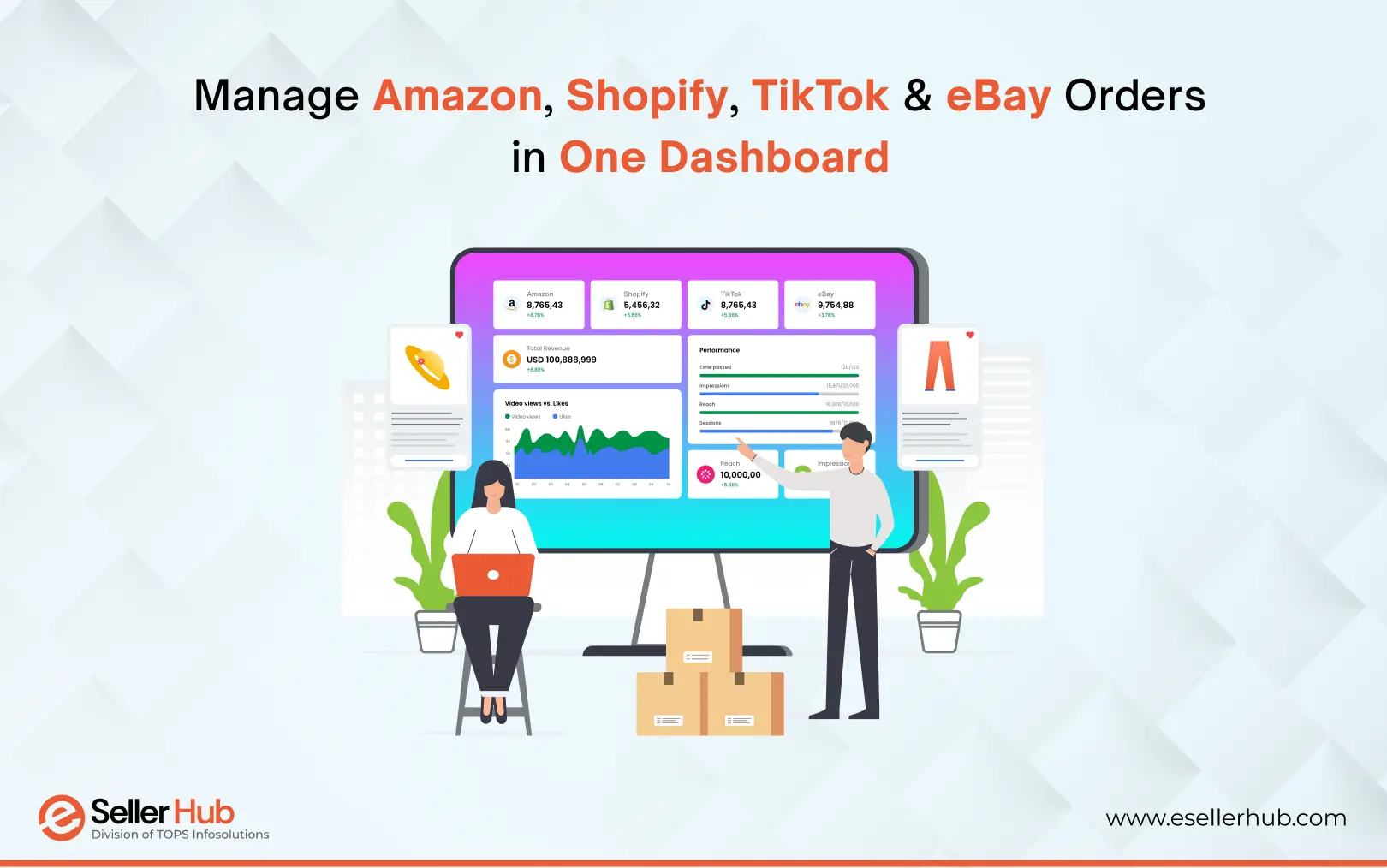
Managing orders across Amazon, Shopify, TikTok Shop, and eBay UK can quickly become overwhelming. Each platform operates differently with its own dashboard, order flow, and fulfilment process. As your sales increase, the complexity grows too. Stock levels slip out of sync, updates get delayed, and customers wait longer for responses while your team jumps between systems.
To solve this challenge, many successful UK sellers are now centralising their operations with a multi-marketplace order system. Instead of managing each marketplace separately, they connect everything into one unified backend. Having a single view of orders provides complete visibility across all marketplaces, allowing teams to process, track, and fulfil every order from one place in real time.
In this guide, you will discover why a centralised order management system is essential for scaling multi-channel operations, how to build one step by step, and when automation can help you save valuable time. Whether you are an independent retailer or a growing 3PL provider, this approach will help you transition from manual processes to streamlined, scalable growth.
The Problem with Multi-Channel Order Management
Selling across multiple marketplaces often creates data silos. When platforms like Amazon, Shopify, TikTok Shop, and eBay UK do not communicate with each other, managing orders and inventory becomes inefficient and costly.
- Inventory drift and overselling: A product may sell out on eBay UK while still showing as available on Shopify. This leads to cancelled orders, platform penalties, and significant damage to seller ratings.
- Operational friction: Switching between multiple dashboards to manage orders, reports, and tracking details increases manual work. This fragmented approach significantly raises the risk of human errors.
- Limited visibility for growth: Without a multi-marketplace order system, sellers lack a clear view of total stock and sales. This makes accurate forecasting difficult and prevents data-driven decision making.
Fragmented data increases operational effort, slows scalability, and negatively impacts the customer experience.
What is a “Single View of Orders”?
A single view of orders is a centralised dashboard that consolidates order data from Amazon, Shopify, TikTok Shop, and eBay UK into one interface in real time. Instead of treating each marketplace as a separate system, this setup becomes the operational control center for your business.
It provides one unified view that removes the need to switch between multiple platforms. From a single screen, sellers can track shipments, process labels, and fulfil orders regardless of where the purchase was made.
Simple Comparison: The Impact of Centralization
| Feature | Without Single View | With Single View |
|---|---|---|
| Daily workflow | Manual checks across multiple tabs | One screen for all channels |
| Accuracy | High error rate from manual updates | Real-time sync and automation |
| Fulfilment speed | Slow and fragmented processing | Faster, batch fulfilment |
| Inventory control | Constant risk of overselling | Automated stock updates |
By implementing a centralised order management system, sellers replace disconnected tasks with a streamlined workflow that improves accuracy, speed, and visibility across all sales channels.
Why It’s Important for Amazon, Shopify, TikTok, and eBay UK Sellers
For sellers operating across multiple platforms, a centralized order management system is no longer optional. It is essential for maintaining control, accuracy, and scalability in a multi-channel eCommerce environment.
- Unified reporting: A single view of orders provides consolidated sales and order data across Amazon, Shopify, TikTok Shop, and eBay UK, enabling better visibility and informed decision making.
- Real-time stock synchronization: With a robust multi-channel order management system, inventory updates automatically across all marketplaces, reducing the risk of overselling, stock inconsistencies, and cancelled orders.
- Faster fulfilment: Centralised order processing allows sellers to manage picking, packing, and shipping more efficiently, improving fulfilment speed and delivery performance.
- Simplified returns and customer support: When all order data lives in one system, handling returns, refunds, and customer queries becomes faster and more consistent across channels.
- Scalable operations: A robust order management solution supports business growth by allowing sellers to add new marketplaces or sales volume without increasing manual workload.
How to Build a Single View of Orders
Building a centralised order management system requires a structured technical approach to ensure data flows accurately between your marketplaces and your backend.
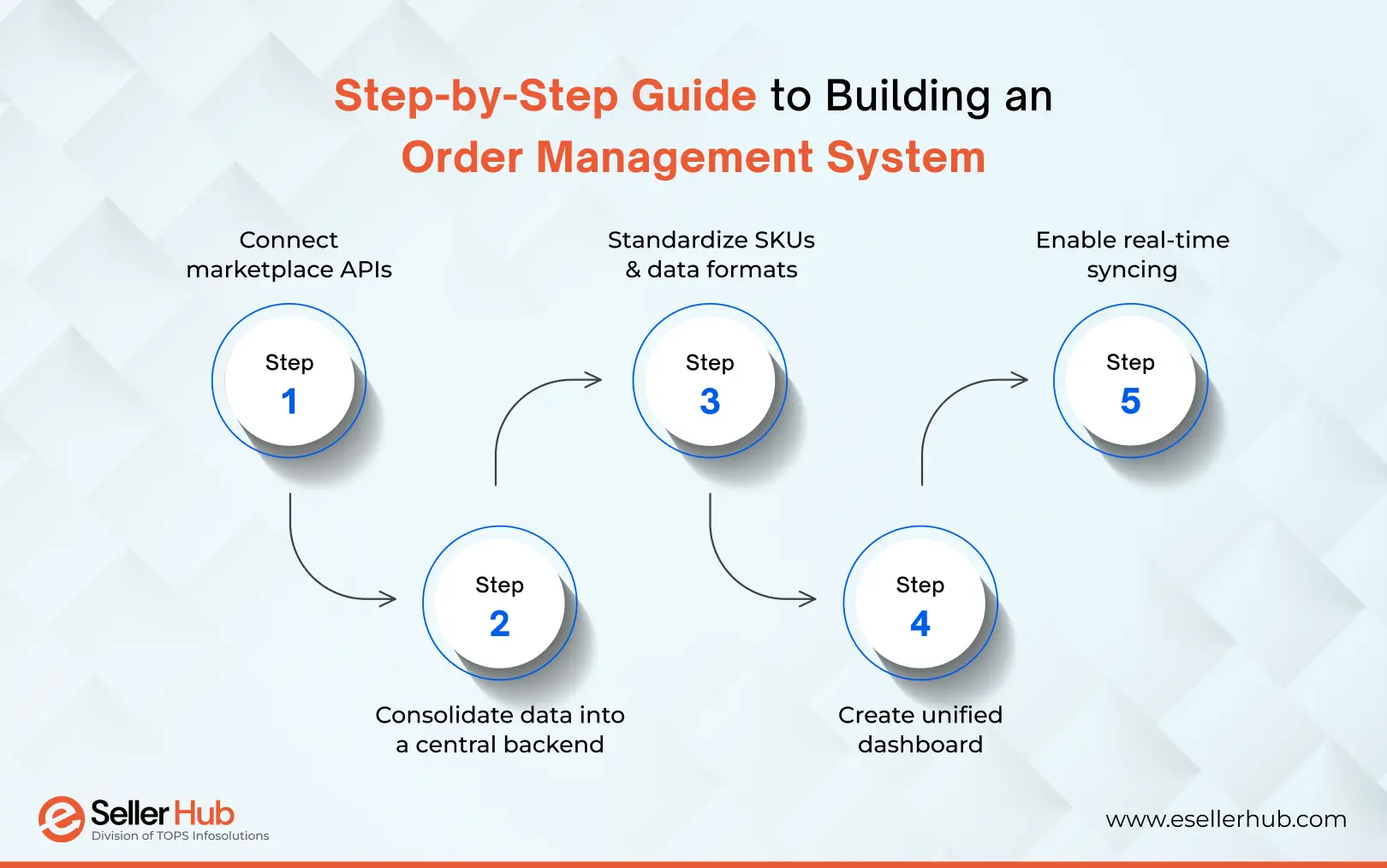
Step 1: Connect marketplace APIs
The first step is establishing secure connections using Amazon SP-API integration, Shopify Admin API, TikTok Shop API, and eBay REST APIs. These connections allow your system to “talk” to each marketplace to pull order details and push inventory updates.
Step 2: Consolidate data into a central backend
Once connected, you need a middleware or custom backend to act as a data hub. This system collects raw data from all sources and stores it in a unified database, ensuring no order is missed.
Step 3: Standardise SKUs and data formats
Marketplaces often use different formats for order IDs and timestamps. You must map these to a master format. Most importantly, you need a Master SKU list to link a product like “Blue-Shirt-S” on Shopify to “B01-S-BLU” on Amazon.
Step 4: Create a unified dashboard
Develop a front-end interface where your team can view all orders. This dashboard can be integrated into your existing warehouse management system (WMS) or ERP to streamline your daily operations.
Step 5: Enable real-time syncing
To keep inventory accurate, use webhooks for instant notifications of new sales. For platforms where webhooks are limited, set up optimized polling intervals to ensure your stock levels remain synchronized.
Technical Challenges to Consider
- API Rate Limits: Marketplaces restrict how many requests you can make per second. Overloading these will cause sync failures.
- Authentication: Managing OAuth tokens for multiple platforms requires a secure and automated refresh process.
- Complex SKU Mapping: Handling bundles or kits where one sale on TikTok Shop deducts multiple individual units in your warehouse.
Avoid Common Pitfalls
- Mismatched SKUs: Inconsistent naming across channels is the leading cause of inventory errors.
- Slow Sync Intervals: If your system only updates every 30 minutes, you still face a high risk of overselling.
- Weak Error Handling: Your system must have “retry logic” to handle temporary API downtimes without losing order data.
Build vs. Buy: What’s Better?
When centralising orders across multiple marketplaces, sellers typically choose between off-the-shelf software and a custom-built system. Each approach has its place, depending on business complexity and growth plans.

Off-the-shelf software
These solutions are quick to deploy and require minimal setup. However, they often come with fixed workflows, limited customization, and ongoing subscription costs. As your operations grow, these limitations can become a bottleneck, especially when trying to integrate unique warehouse management system (WMS) requirements.
Custom-built system
A custom order management solution is designed around your specific workflows. It offers greater flexibility, scalability, and long-term control. Unlike standard apps, a custom system allows for deep Amazon SP-API integration and tailored logic that adapts as your business evolves.
When to choose a custom
A custom solution is the better option if you manage multiple warehouses, work with 3PL partners, handle complex fulfillment rules, or plan to scale without increasing manual effort. It is particularly effective for businesses that have outgrown standard tools and require custom eCommerce solutions to maintain their competitive edge.
The Role of Automation
Automation plays a critical role in reducing manual work and minimizing human error in multi-channel order management. Once your marketplaces are connected through a centralised system, automated workflows keep operations running smoothly in the background.
Common automation workflows include
- Automatic order syncing across all marketplaces: New sales from every channel are instantly captured and ready for processing.
- Low-stock alerts to prevent overselling: Notifications are triggered before inventory reaches zero, allowing proactive restocking.
- Automated shipping and tracking notifications: Tracking details are sent to customers and marketplaces as soon as a label is generated.
- Real-time inventory updates across channels: A sale on TikTok Shop immediately updates stock levels on Shopify, Amazon, and eBay UK.
With automation in place, orders, inventory, and fulfilment statuses remain accurate without manual intervention. This consistency across platforms frees your team to focus on growth instead of repetitive operational tasks.
Benefits of a Centralised Order Management System
A centralised order management system brings structure and control to multi-channel operations, enabling sellers to manage growth without operational stress.
-
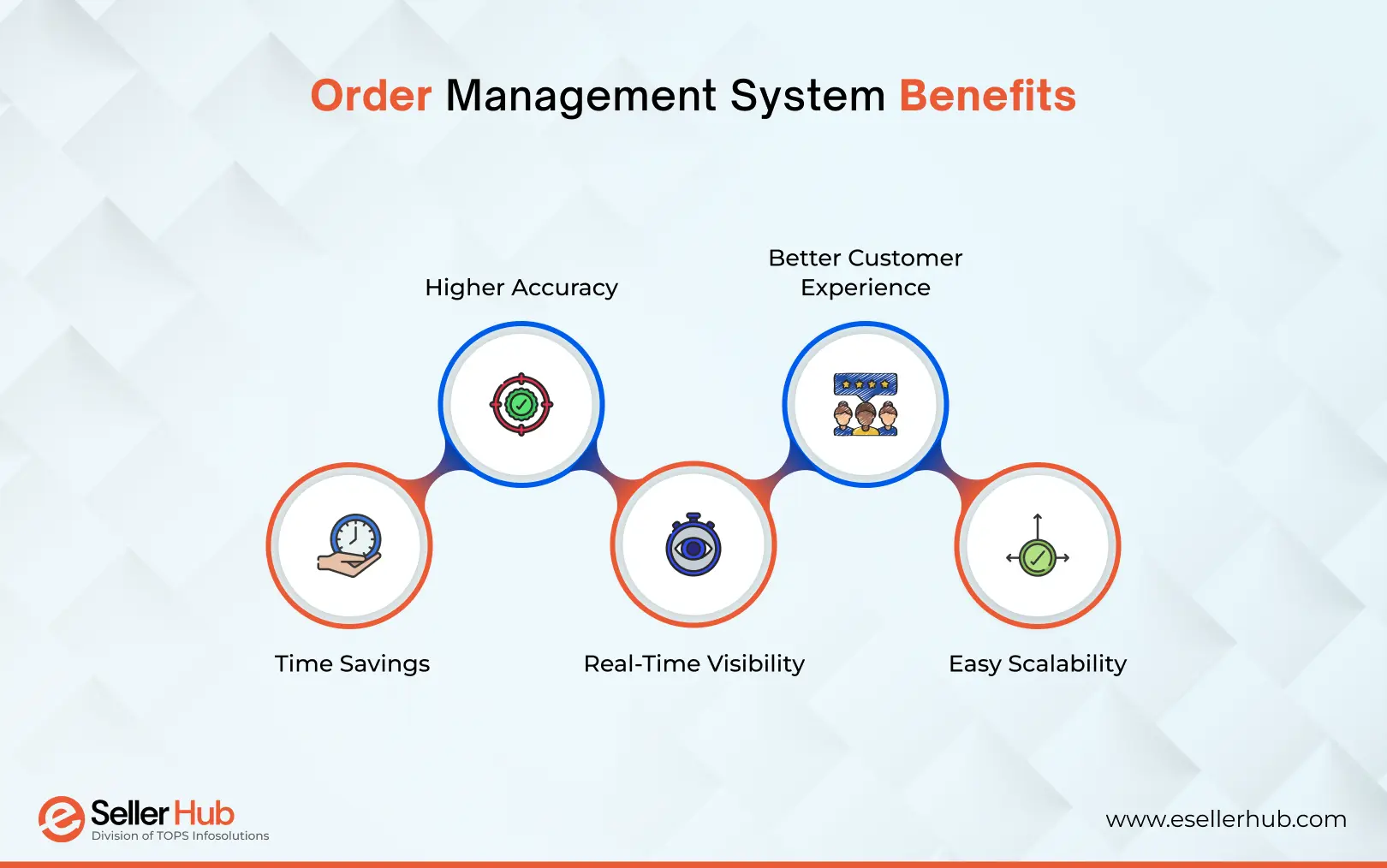
Time savings
Eliminates repetitive manual tasks and reduces time spent switching between platforms. Order processing, updates, and reporting happen from one place, freeing teams to focus on strategic work instead of daily firefighting.
-
Higher accuracy
Real-time data synchronisation minimises order errors, inventory mismatches, and fulfilment issues. This leads to fewer cancellations, reduced refunds, and more consistent marketplace performance metrics.
-
Real-time visibility
Provides a live, unified view of orders, inventory, and fulfilment status across all marketplaces. Sellers gain better control over operations and can respond faster to demand changes or issues.
-
Better customer experience
Faster fulfilment, accurate stock availability, and timely notifications improve delivery reliability. Customers receive consistent updates regardless of where they purchase, increasing trust and satisfaction.
-
Easy scalability
Supports business growth by allowing sellers to add new marketplaces or increase order volume without increasing manual effort. The system scales with demand while maintaining operational stability.
How eSellerHub Helps
eSellerHub specialises in building custom, modular order management systems for multi-channel sellers and 3PL providers. Instead of forcing businesses into rigid software, eSellerHub designs solutions that adapt to real operational workflows.
Our systems integrate seamlessly with Amazon, Shopify, TikTok Shop, eBay UK, and other marketplaces, creating a true single view of orders across all channels. Every integration is designed to support real-time syncing, automation, and accurate inventory management.
Each solution is tailored to your business requirements, whether you manage multiple warehouses, complex fulfilment rules, or high order volumes. The result is a scalable backend that reduces manual work, improves visibility, and supports long-term growth.
Conclusion
Managing orders across Amazon, Shopify, TikTok Shop, and eBay UK does not have to mean juggling multiple systems and manual processes. A single view of orders brings all marketplace data into one centralised order management system, improving visibility, accuracy, and fulfilment speed.
By centralising and automating order workflows, sellers can reduce errors, streamline operations, and scale confidently without increasing operational complexity, making their multi-channel business more efficient and future-ready.



 34173 Gannon Terrace,